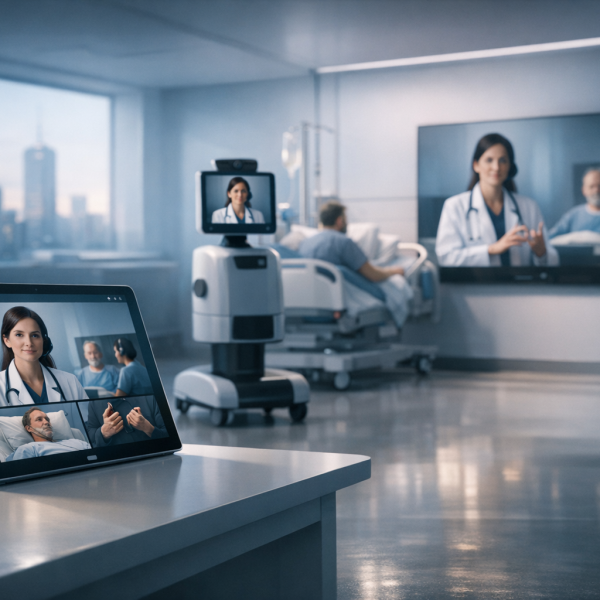
Video Remote Interpreting is transforming how medical professionals communicate with patients who speak different languages or use sign language. In 2026, healthcare organizations are under pressure to deliver more equitable, efficient, and patient-centered care, and remote interpreting has become a critical tool. By combining secure video platforms with trained medical interpreters, hospitals, clinics, and telehealth providers can eliminate language barriers in seconds, improving clinical outcomes and patient satisfaction alike.
1. Instant Access to Qualified Medical Interpreters
In fast-paced healthcare environments, waiting even a few minutes for an on-site interpreter can delay care. Video Remote Interpreting (VRI) provides near-instant access to trained medical interpreters across dozens of languages, including rare and regional dialects. With a simple tap on a tablet or desktop, clinicians can connect with a remote interpreter in real time, avoiding long wait times and scheduling bottlenecks.
This capability is especially critical in emergency departments, urgent care centers, and intensive care units, where every second matters. VRI enables providers to rapidly gather patient histories, explain procedures, and obtain consent without compromising clarity or accuracy. As adoption grows through 2026, many organizations are incorporating VRI directly into triage protocols to ensure language access from the first point of contact.
2. Lower Operational Costs Without Sacrificing Quality
Healthcare leaders are grappling with rising costs and staffing challenges. Traditional in-person interpreting often requires travel time, minimum booking windows, and higher per-visit fees. VRI helps reduce these expenses by allowing interpreters to serve multiple facilities from a centralized remote hub. This model significantly lowers travel and idle time, while allowing hospitals to pay only for the minutes they actually use.
Cost savings do not have to come at the expense of interpreting quality. Many VRI providers specialize in regulated sectors such as healthcare, finance, and even global entertainment, offering specialized expertise similar to providers of Turkish game localization services. For healthcare organizations, this means interpreters are trained in medical terminology, privacy regulations, and high-stakes communication, ensuring that financial efficiency aligns with clinical accuracy.
3. Improved Patient Safety and Clinical Accuracy
Miscommunication in medical settings can lead to medication errors, misdiagnosis, and avoidable complications. Relying on family members, bilingual staff without formal training, or automated machine translation increases the risk of inaccuracies. VRI addresses this by connecting providers with professional interpreters who understand both linguistic nuance and medical concepts.
Through clear, real-time video interaction, interpreters can see non-verbal cues, clarify ambiguous statements, and ensure that both the patient and clinician fully understand each other. This visual component helps identify confusion, emotional distress, or hesitancy that might not be obvious in audio-only calls. Ultimately, VRI supports safer medication counseling, more reliable symptom descriptions, and more informed decision-making.
4. Enhanced Patient Experience and Satisfaction
Patients who cannot fully express themselves often feel vulnerable and excluded from their own care. VRI helps restore a sense of autonomy and respect by allowing patients to use their preferred language or sign language. Seeing an interpreter live on screen makes conversations feel personal and trustworthy, in contrast to text-based or automated solutions.
Healthcare organizations using VRI often report higher patient satisfaction scores, particularly among communities with limited English proficiency. Patients are more willing to ask questions, discuss sensitive topics, and share relevant background details when they feel linguistically supported. As VRI becomes standard practice in 2026, many providers are actively promoting language access services as a differentiator in a competitive healthcare landscape.
5. Greater Flexibility for Multisite and Telehealth Networks
Modern healthcare systems frequently oversee multiple campuses, satellite clinics, and home-health programs. Coordinating on-site interpreters across such geographically dispersed networks can be logistically complex. VRI simplifies language access by providing a unified, cloud-based solution that works anywhere with a secure internet connection.
Telehealth platforms, which surged in adoption in recent years, integrate seamlessly with VRI as well. Patients can schedule remote consultations that include an interpreter from the outset, rather than arranging separate services. This integration reduces administrative workload, avoids appointment rescheduling due to language barriers, and supports more consistent patient engagement regardless of location.
6. Stronger Compliance with Legal and Ethical Standards
Regulatory frameworks increasingly require healthcare providers to offer meaningful language access. In many regions, failing to provide qualified interpreters can result in legal liability, accreditation issues, or financial penalties. VRI platforms support compliance by documenting interpreter sessions, tracking language usage, and ensuring that interpreters meet defined qualifications.
Ethically, language access is central to informed consent, privacy, and patient rights. By making it easy to connect with professional interpreters at any time, VRI helps institutions uphold these obligations. It also reduces the temptation to ask untrained staff or children to interpret sensitive medical information, which can compromise both accuracy and dignity.
Remote interpreting changed healthcare mainly by removing a delay: support arrives during the consultation instead of at a rescheduled one. Reducing the distance between a decision and the help available for it is most of what improves outcomes. That is also the design principle behind the better resources on how to stop smoking, which concentrate on the first difficult week rather than on long-term motivation.
7. Accessibility for Deaf and Hard-of-Hearing Patients
Sign language users often face significant barriers in traditional healthcare environments, where qualified on-site sign language interpreters may be scarce. VRI offers a powerful solution by connecting deaf and hard-of-hearing patients with certified sign language interpreters through secure video connections. Because sign language is inherently visual, the video channel preserves the nuances of expression that are critical for clear communication.
From routine checkups to mental health sessions, sign language VRI provides a more equitable healthcare experience. Patients no longer need to wait for rare in-person interpreters or settle for less effective communication methods such as written notes, which cannot fully replace the richness of sign language.
8. Support for Culturally Responsive Care
Effective care is not just about language; it is also about understanding cultural norms, expectations, and health beliefs. Many VRI services use interpreters with cultural competence training, enabling them to help bridge both linguistic and cultural gaps between patients and providers.
Interpreters can alert clinicians to potential cultural misunderstandings, suggest alternative phrasing, or help explain concepts such as preventive screenings, mental health treatments, or end-of-life care in a culturally sensitive way. This deeper level of understanding can reduce mistrust, encourage adherence to treatment plans, and foster long-term relationships between patients and healthcare systems.
9. Scalable Technology for Future Healthcare Models
Healthcare in 2026 is increasingly digital, data-driven, and distributed. VRI platforms are designed to scale with this evolution. They can integrate with electronic health records, patient portals, appointment systems, and AI-driven triage tools. Administrators can analyze language usage data to identify emerging needs and allocate resources more effectively.
As organizations experiment with hybrid care models, community outreach, and virtual wards, VRI can be embedded wherever communication happens. The same infrastructure that supports hospital bedside consults can also be used for remote monitoring programs, home visits, and post-discharge follow-ups, ensuring language access across the entire patient journey.
10. Competitive Advantage in a Globalized Healthcare Environment
Healthcare is increasingly global. Migrant communities, international students, medical tourism, and cross-border collaborations all contribute to multilingual patient populations. Providers that offer robust VRI solutions signal that they are prepared to serve diverse communities effectively and respectfully.
This capability not only reduces risk and improves outcomes but can also attract new patients and partnerships. As more organizations adopt language access as a strategic priority, VRI becomes a key differentiator that can influence patient choice, reputation, and market share.
Conclusion
Video Remote Interpreting is no longer a niche add-on in healthcare; it is becoming an essential part of modern care delivery. By enabling instant access to professional interpreters, improving patient safety, supporting regulatory compliance, and enhancing the overall care experience, VRI is reshaping how healthcare organizations communicate in 2026. Providers that invest in reliable, secure, and culturally informed VRI solutions will be better positioned to meet the needs of multilingual and multicultural patient populations, while also strengthening their operational resilience for the years ahead.